
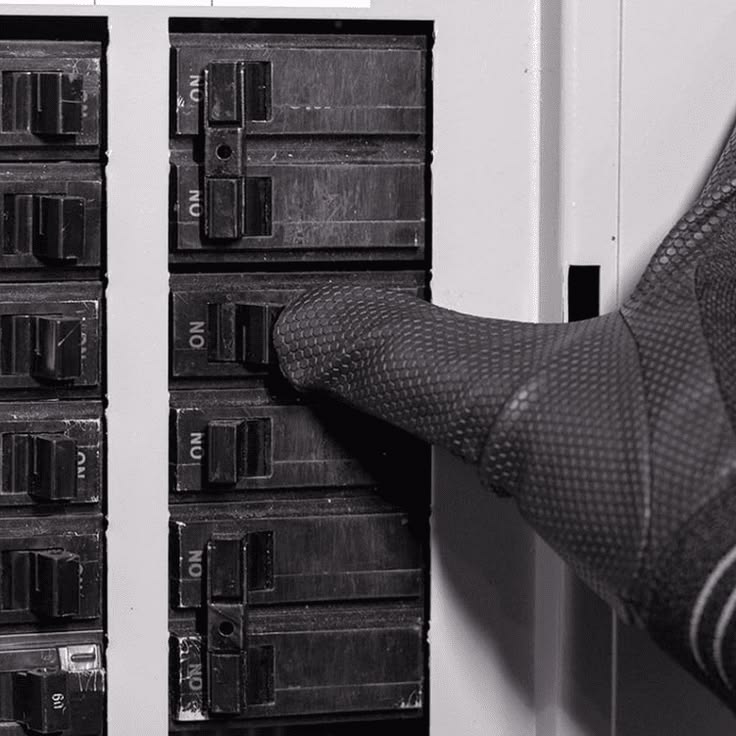
Introduction: Don’t Ignore a Tripping Breaker
If your circuit breaker keeps tripping, it’s not just an annoyance—it’s your home’s emergency warning system screaming for help. Every time that switch flips to “OFF,” it’s preventing an electrical fire, appliance damage, or potentially deadly shock. But here’s what most homeowners don’t realize: a breaker that trips repeatedly is telling you something is seriously wrong behind your walls.
Ignoring a tripping breaker won’t make the problem go away. In fact, the National Fire Protection Association (NFPA) reports that electrical distribution systems are the third leading cause of home fires in the United States, with malfunctioning breakers and overloaded circuits responsible for thousands of house fires every year.
Whether you’re dealing with a breaker that trips every time you run the microwave, or one that mysteriously shuts off at night, this comprehensive guide will walk you through exactly why your circuit breaker keeps tripping, how to troubleshoot it safely, and—most importantly—when to call a 24/7 emergency electrician before disaster strikes.
📞 If your breaker has tripped more than once today, call our national emergency electricians call now 866-227-8161
Available 24/7/365. No overtime fees. Licensed contractors dispatched to your area.
What Is a Circuit Breaker and Why Does It Trip?
Before we dive into the causes, let’s quickly understand what a circuit breaker actually does.
A circuit breaker is a safety device located inside your electrical panel (also called a breaker box or load center). Its sole job is to monitor the electrical current flowing through your home’s circuits. Each circuit is designed to handle a specific amperage—usually 15 or 20 amps for standard household circuits.
When everything works normally, electricity flows safely from your panel, through the hot wire, into your outlets and appliances, and back through the neutral wire. But when something goes wrong—too much current, a short, or a ground fault—the breaker instantly cuts power to prevent overheating, fires, and electrocution.
Think of it like a security guard. When it senses danger, it shuts things down immediately. But if that security guard is constantly shutting things down, you don’t have a security problem—you have an intruder problem that needs professional help.
7 Reasons Your Circuit Breaker Keeps Tripping
When a breaker trips once, it might be a fluke. When it keeps tripping, there’s always an underlying cause. Here are the seven most common reasons, ranked from most to least common.
1. Circuit Overload (Most Common)
An overloaded circuit happens when you try to draw more electricity than the circuit is designed to handle. It’s the #1 reason breakers trip in American homes.
Common scenarios:
- Running a microwave, toaster oven, and coffee maker on the same kitchen circuit
- Using a space heater on a circuit that already powers your TV and gaming console
- Running a vacuum cleaner while the AC is cycling on
- Plugging multiple high-draw appliances into power strips on the same circuit
The math is simple: A 15-amp circuit can safely handle about 1,800 watts. A 20-amp circuit handles about 2,400 watts. If your microwave (1,200W) + toaster oven (1,000W) + fridge cycling (700W) all hit at once, you’re pulling 2,900 watts through a 20-amp circuit. The breaker trips because it’s doing its job.
How to identify it: The breaker trips when you use specific appliances, especially high-wattage devices like hair dryers, space heaters, microwaves, or AC units.
The danger: Many homeowners “solve” this by upgrading to a higher-amp breaker. This is extremely dangerous. The breaker is sized to protect the WIRES in your walls. Putting a 30-amp breaker on 14-gauge wire (rated for 15 amps) allows the wires to overheat and start a fire inside your walls before the breaker ever trips.
📞 Don’t upgrade your breaker without upgrading your wiring. Call a licensed electrician: [866-227-8161
2. Short Circuit (Most Dangerous)
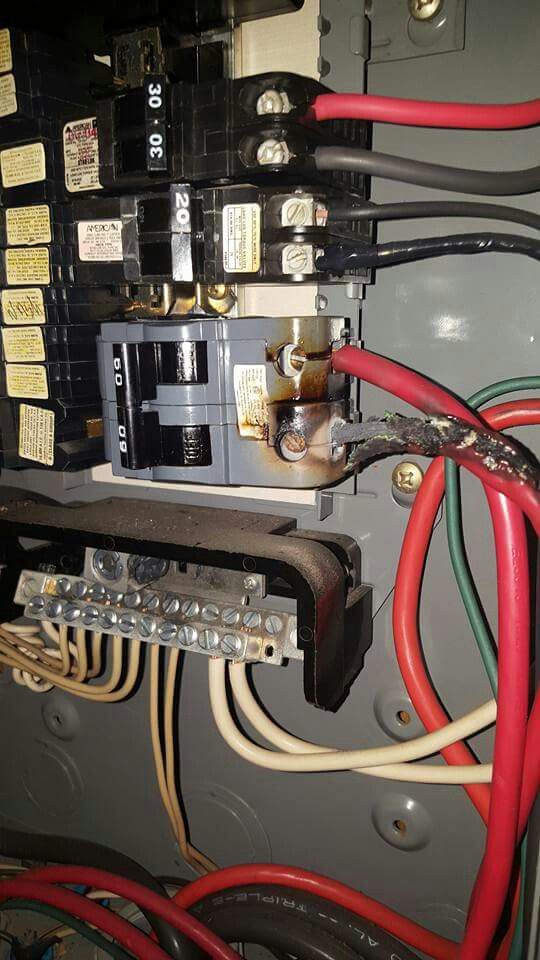
A short circuit occurs when a hot wire (black) touches another hot wire or a neutral wire (white). This creates a direct path for electricity with almost zero resistance, causing a massive surge of current that instantly trips the breaker.
Signs of a short circuit:
- A loud “pop” or “bang” when the breaker trips
- Burn marks, blackening, or melting around outlets
- A burning smell near outlets or switches
- The breaker trips immediately when you reset it, even with nothing plugged in
- Sparks visible from outlets when plugging things in
Common causes:
- Damaged wire insulation (rodents, nails, age)
- Loose wire connections inside outlets or switches
- Faulty appliances with damaged cords
- Water entering outlets or junction boxes
- DIY electrical work done incorrectly
The danger: Short circuits generate extreme heat instantly. According to the U.S. Consumer Product Safety Commission (CPSC), short circuits are responsible for approximately 51,000 home fires every year. If you suspect a short circuit, do not reset the breaker repeatedly.
🚨 If you see burn marks or smell burning, turn off the main breaker and call an emergency electrician immediately: [رقم MarketCall]
3. Ground Fault (Shock Hazard)
A ground fault happens when a hot wire touches a grounded surface—like the metal box of an outlet, a grounded appliance frame, or the ground wire itself (green or bare copper). This is especially dangerous in wet areas.
Where ground faults happen most:
- Bathrooms (hair dryers near sinks)
- Kitchens (appliances near water)
- Garages and outdoor outlets
- Basements with moisture issues
- Near swimming pools or hot tubs
Modern protection: Since the 1970s, the National Electrical Code (NEC) has required GFCI outlets (Ground Fault Circuit Interrupters) in kitchens, bathrooms, garages, and outdoor areas. GFCIs trip in as little as 1/40th of a second when they detect a ground fault, preventing electrocution.
If your GFCI keeps tripping:
- Unplug everything on the circuit
- Press the “RESET” button on the GFCI outlet
- Plug devices in one at a time to find the culprit
- If it trips with nothing plugged in, you have a wiring ground fault
The danger: Without GFCI protection, a ground fault can send deadly current through your body if you touch a faulty appliance while grounded (standing on a wet floor, touching a sink, etc.).
📞 GFCI problems often indicate wiring issues behind walls. Call a pro: [رقم MarketCall]
4. Arc Fault (Silent Fire Starter)
An arc fault is when electricity jumps between two conductors—like two damaged wires almost touching. Unlike a short circuit (direct contact), an arc fault creates a high-temperature plasma arc that can reach 10,000°F—hot enough to ignite wood, insulation, or dust inside your walls.
The terrifying part: Arc faults often happen silently inside walls. You might not know there’s a problem until you smell smoke.
Common causes:
- Damaged or deteriorated wire insulation
- Wires pinched by nails, screws, or staples
- Loose connections in outlets or switches
- Cords damaged by furniture, doors, or pets
- Overheated wires in overloaded circuits
Modern protection: Since 1999, the NEC has required AFCI breakers (Arc Fault Circuit Interrupters) in bedrooms, and since 2014, in most living spaces. AFCIs detect the unique electrical signature of an arc and trip before a fire starts.
If your AFCI breaker keeps tripping:
- It may be detecting a dangerous arc in your wiring
- It could also be “nuisance tripping” from certain appliances (vacuums, treadmills, some LED drivers)
- A licensed electrician can determine if it’s a real hazard or a compatibility issue
📞 AFCI breakers save lives. If yours keeps tripping, don’t bypass it—call an electrician: [رقم MarketCall]
5. Worn-Out or Faulty Breaker
Sometimes, the breaker itself is the problem. Circuit breakers are mechanical devices with internal springs, contacts, and trip mechanisms. Like any mechanical device, they wear out over time.
Signs of a bad breaker:
- The breaker trips even when the circuit isn’t overloaded
- The breaker feels loose or wobbly in the panel
- You hear buzzing, humming, or sizzling from the breaker
- The breaker is hot to the touch
- The breaker won’t stay in the “ON” position
- Visible scorch marks or burning smell from the panel
- The breaker is more than 20-30 years old
Important: Just because a breaker is old doesn’t mean it’s bad. But if a breaker has been tripping repeatedly for months, the internal mechanism may have weakened, causing it to trip at lower loads than it should.
The danger: A breaker that fails to trip when it should is a silent killer. If your breaker is worn out and your circuit overloads, the wires in your walls will overheat until they ignite the surrounding insulation and framing.
⚠️ Never replace a breaker yourself unless you’re a licensed electrician. Incorrect installation can cause electrocution or fire. Call: [رقم MarketCall]
6. Outdated Electrical Panel
If your home was built before 1990 and still has its original electrical panel, your breaker problems may be a symptom of a much larger issue: your panel can’t handle modern electrical demands.
Common outdated panels:
- Federal Pacific Electric (FPE) panels (1950s-1980s): Known for breakers that fail to trip. The CPSC identified these as a fire hazard. If you have one, it should be replaced immediately.
- Zinsco panels (1950s-1970s): Breakers can melt to the bus bar, preventing them from tripping.
- Pushmatic panels (1950s-1980s): Difficult to find replacement breakers; often unreliable.
- 60-amp or 100-amp panels: Insufficient for modern homes with AC, computers, TVs, and kitchen appliances.
Signs your panel is the problem:
- Your home has a 60 or 100-amp service (modern homes need 200 amps)
- The panel is warm or hot to the touch
- You hear crackling or buzzing from the panel
- Lights dim throughout the house when appliances turn on
- You need extension cords because you don’t have enough outlets
- The panel has rust, corrosion, or burn marks
The fix: A full panel upgrade to a modern 200-amp service with a reliable manufacturer (Square D, Siemens, Eaton) eliminates breaker problems and makes your home safer.
💰 Panel Upgrade Cost: $2,000 – $4,500 (varies by location and complexity)
📞 Get a free estimate for panel replacement: [رقم MarketCall]
7. Loose or Corroded Wiring Connections
Over time, the connections inside your electrical panel, outlets, and switches can loosen due to:
- Thermal expansion and contraction (wires heat up and cool down)
- Vibration from appliances, HVAC systems, or traffic
- Corrosion from humidity, especially in coastal or humid climates
- DIY work done with improper torque on wire nuts or terminals
Why loose connections cause tripping:
A loose connection creates resistance. Resistance creates heat. Heat increases resistance further. This cycle can cause the breaker to trip from overheating, or in worst cases, start a fire at the connection point.
Signs of loose connections:
- Outlets or switches that feel warm
- Intermittent power (flickering lights, outlets that work sometimes)
- Buzzing sounds from outlets or the panel
- Burning smell that comes and goes
- Breakers that trip on hot days but not cool days
The fix: A licensed electrician can perform an electrical panel tune-up, tightening all connections, checking for corrosion, and using thermal imaging to find hot spots before they become dangerous.
📞 Schedule an electrical safety inspection: [رقم MarketCall]
How to Safely Troubleshoot a Tripping Breaker
If your breaker has tripped, follow these steps in order. Stop immediately if you encounter any danger signs.
Step 1: Identify Which Breaker Tripped
Go to your electrical panel (usually in the garage, basement, utility closet, or outside). Look for the breaker switch that is in the middle position or fully “OFF.” Most breakers have a red or orange indicator showing they’ve tripped.
Step 2: Unplug Everything on That Circuit
Before resetting, unplug every device, lamp, and appliance connected to that circuit. This eliminates the possibility of an overloaded circuit and helps you identify if a specific device is causing the problem.
Step 3: Check for Visible Damage
Inspect outlets and switches on the circuit for:
- Burn marks or blackening
- Melted plastic
- Warm or hot surfaces
- Burning smells
- Sparks
If you see any of these, STOP. Do not reset the breaker. Call an electrician.
Step 4: Reset the Breaker
Firmly push the breaker switch to the “OFF” position (you’ll feel a click), then push it to the “ON” position. Stand to the side of the panel and wear safety glasses if possible.
Step 5: Plug Devices Back In One at a Time
If the breaker stays on, reconnect your devices one by one, waiting a few minutes between each. If the breaker trips when you plug in a specific device, that device is likely faulty.
Step 6: If It Trips Again, Call a Pro
If the breaker trips immediately after resetting, or trips again within 24 hours with normal use, you have a wiring problem, short circuit, or bad breaker that requires professional diagnosis.
📞 Breaker still tripping? Call 24/7: [رقم MarketCall]
When to Call an Emergency Electrician (Don’t Wait!)
Some breaker problems are DIY-friendly. Others are emergencies. Call a licensed electrician immediately if:
| Danger Sign | Why It’s Urgent |
|---|---|
| Burning smell | Wires are actively overheating. Fire risk is imminent. |
| Breaker trips immediately | Likely short circuit or bad breaker. Each reset risks fire. |
| Visible sparks | Active arcing. Turn off main breaker and evacuate if severe. |
| Scorch marks on panel | Previous fire or extreme heat damage inside panel. |
| Panel is hot | Internal overheating. Potential panel fire. |
| Buzzing/humming from panel | Loose connections arcing. Silent fire hazard. |
| Aluminum wiring | High fire risk. Needs professional retrofitting. |
| FPE or Zinsco panel | Known fire hazards. Replace immediately. |
🚨 For burning smells, sparks, or hot panels: Turn off the MAIN breaker and call 911 if you see flames. Then call our emergency electricians: [رقم MarketCall]
Cost to Fix a Tripping Breaker (2026 National Averages)
| Repair/Service | Average Cost | Time | When Needed |
|---|---|---|---|
| Breaker replacement | $150 – $300 | 30-60 min | Single bad breaker |
| Circuit diagnosis | $100 – $250 | 1-2 hours | Finding cause of tripping |
| New circuit installation | $500 – $900 | 3-5 hours | Overloaded circuit |
| GFCI/AFCI upgrade | $200 – $400/outlet | 1-2 hours | Ground/arc fault protection |
| Panel replacement (100A to 200A) | $2,000 – $4,500 | 1-2 days | Outdated/undersized panel |
| Full home rewiring | $8,000 – $15,000 | 3-7 days | Old/dangerous wiring |
| Emergency service call | $150 – $300 + labor | Same day | Nights, weekends, holidays |
💡 Many electricians offer FREE safety inspections with repair work. Ask about package deals for panel upgrades + circuit additions.
📞 Get upfront pricing with no hidden fees: [رقم MarketCall]
How to Prevent Breakers From Tripping in the Future
Once you’ve fixed the immediate problem, take these steps to prevent future issues:
1. Spread Out High-Wattage Appliances
Don’t run your microwave, toaster oven, air fryer, and coffee maker simultaneously on the same kitchen circuit. Use different outlets on different circuits.
2. Upgrade to Dedicated Circuits
Major appliances should have their own dedicated circuits:
- Air conditioner (240V, 30-50 amp)
- Electric dryer (240V, 30 amp)
- Electric range/oven (240V, 40-50 amp)
- Refrigerator (120V, 20 amp dedicated)
- Microwave (120V, 20 amp dedicated)
- Dishwasher (120V, 20 amp dedicated)
3. Install Whole-Home Surge Protection
Power surges from lightning, grid switching, or large appliances starting can damage breakers and cause nuisance tripping. A whole-home surge protector installed at your panel ($300-$800) protects everything.
4. Schedule Annual Electrical Inspections
A licensed electrician can catch loose connections, corrosion, and breaker wear before they cause problems. Think of it like an annual physical for your home’s electrical system.
5. Don’t Ignore the First Trip
The first trip is a warning. The second trip is confirmation. The third trip is an emergency waiting to happen. Address it early before it becomes expensive—or deadly.
Frequently Asked Questions (FAQ)
Is it dangerous if my circuit breaker keeps tripping?
Yes. While the breaker is protecting you by cutting power, the fact that it keeps tripping means there’s an underlying electrical problem—overload, short circuit, or faulty wiring—that could start a fire if ignored.
Can I just replace the breaker myself?
No, unless you’re a licensed electrician. Breakers must match your panel’s manufacturer and specifications exactly. Incorrect installation can cause electrocution, fire, or void your home insurance. Always hire a pro.
Why does my breaker trip when it rains?
Water is getting into an outdoor outlet, light fixture, or the panel itself. This creates a ground fault. You need GFCI protection and weatherproof covers, or the panel may need to be relocated to a drier area.
Why does my breaker trip at night?
Nighttime is when many homes run dishwashers, dryers, and AC simultaneously. Also, if you have an electric water heater on a timer, it may cycle on at night and overload a shared circuit.
How many times can I reset a tripped breaker?
Once or twice maximum. If it trips a third time, stop. Repeatedly forcing a breaker to stay on with a fault condition is like ignoring a fire alarm. Call an electrician.
What’s the difference between a fuse and a breaker?
Fuses are one-time-use and found in older homes (pre-1960s). Breakers are resettable. If you still have a fuse box, consider upgrading to a modern breaker panel for safety and convenience.
Why does my AFCI breaker keep tripping for no reason?
AFCI breakers can “nuisance trip” from certain appliances (vacuums, treadmills, some power tools) due to normal electrical noise. However, frequent tripping usually indicates a real arc fault. An electrician can distinguish between the two.
How long do circuit breakers last?
20-30 years under normal conditions. However, breakers in panels that run hot, experience frequent trips, or are exposed to humidity may fail much sooner.
Can a bad appliance cause a breaker to trip?
Yes. A faulty refrigerator compressor, a shorted hair dryer, or a damaged space heater can all cause breakers to trip. Unplug everything and reconnect one at a time to identify the culprit.
Is a buzzing breaker dangerous?
Yes. Buzzing usually indicates loose connections or arcing inside the panel. This is a fire hazard. Turn off the main breaker and call an electrician immediately.
Final Warning: Don’t Gamble With Electrical Safety
A tripping breaker is not a nuisance—it’s a lifesaving device doing its job. But it’s also a symptom. Every trip is a message that something in your electrical system needs professional attention.
The homeowners who ignore tripping breakers are the ones who end up with:
- $50,000+ in fire damage
- Destroyed appliances and electronics
- Injuries or worse
- Insurance claims denied due to neglected maintenance
The homeowners who call at the first sign of trouble spend a few hundred dollars and sleep soundly knowing their family is safe.
📞 Don’t wait for the third trip. Call our 24/7 national emergency electricians now: [رقم MarketCall]
Licensed. Insured. Background-checked. Dispatched to your area within 60 minutes.
Related Articles
- Burning Smell From Outlet? Here’s What to Do
- Electrical Panel Humming? Fire Hazard Guide
- Power Outage in One Room? Troubleshooting Guide
- Lights Flickering? Don’t Ignore It
Tags: Circuit Breaker, Electrical Panel, Short Circuit, Ground Fault, AFCI, GFCI, Emergency Electrician, Electrical Fire, Home Safety, 2026
Schema Markup to Implement:
- Article Schema
- FAQPage Schema (10 questions)
- HowTo Schema (Troubleshooting steps)
- BreadcrumbList Schema