
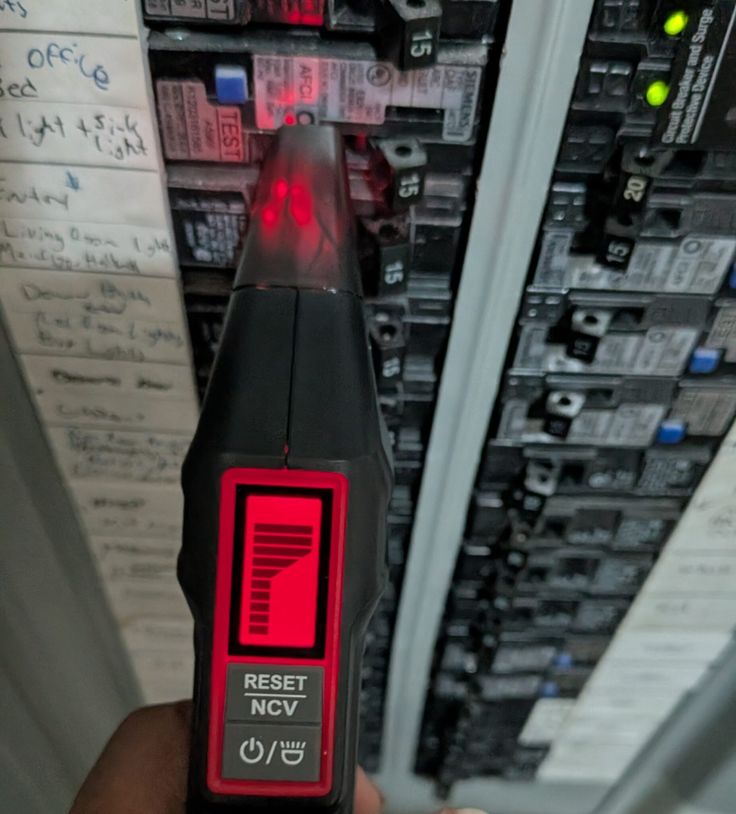
Why Is My Bathroom Breaker Tripping? A National Emergency Guide
If your circuit breaker keeps tripping in the bathroom, you’re facing one of the most dangerous electrical problems in any American home. Bathrooms combine three deadly elements: water, electricity, and high-humidity environments. The National Electrical Code (NEC) recognizes this danger by requiring more protective devices in bathrooms than any other room—except kitchens.
📞 If your bathroom breaker has tripped more than once this week, call our 24/7 national emergency electricians now: [رقم MarketCall]
Available in all 50 states. Licensed contractors dispatched to your area. No overtime fees.
Circuit Breaker Keeps Tripping in your home? Don’t ignore it—this is your electrical system’s emergency alarm warning you of danger. Every trip means something is seriously wrong: overloaded circuits, short circuits, ground faults, or worn-out breakers. The National Fire Protection Association reports that electrical distribution failures cause over 51,000 house fires annually, and a repeatedly tripping breaker is often the first warning sign. While the breaker is protecting you by cutting power, the underlying problem won’t fix itself. In fact, it gets worse every day. If your breaker has tripped more than once this week, you need professional diagnosis immediately. Our licensed electricians are available 24/7 nationwide to identify the cause and fix it safely before disaster strikes.
The Bathroom = America’s Most Dangerous Room for Electricity
The Consumer Product Safety Commission (CPSC) reports that bathroom electrocutions account for nearly 15% of all home electrocution deaths in the United States. Why? Because water is an excellent conductor of electricity, and bathrooms are constantly wet.
The NEC mandates:
- GFCI protection on ALL bathroom outlets since 1975
- Dedicated 20-amp circuit for bathroom outlets since 1993
- Separate lighting circuit to prevent total darkness if outlets trip
- No standard outlets within 3 feet of tubs or showers
When your bathroom breaker trips, it’s not just protecting your hair dryer—it’s preventing your electrocution.
5 Reasons Your Bathroom Breaker Keeps Tripping
1. Ground Fault (The #1 Killer in Bathrooms)
A ground fault occurs when electricity escapes its intended path and flows through water or a person’s body to the ground. In bathrooms, this happens when:
Common scenarios:
- Hair dryer falls into sink while running (1,875+ electrocutions since 1982)
- Radio or phone charger near tub slips into water
- Extension cord on wet floor creates path to ground
- Faulty appliance with damaged cord contacts wet surface
- Leaking pipe drips onto outlet or wiring
How GFCI saves your life:
A Ground Fault Circuit Interrupter (GFCI) detects current leakage as small as 4-6 milliamps—less than 1% of what can stop your heart. It shuts off power in 1/40th of a second, faster than a heartbeat.
But if your GFCI keeps tripping:
- It may be worn out (10-15 year lifespan)
- There may be moisture in the outlet box
- A real ground fault exists in your wiring
- The circuit is overloaded with multiple appliances
⚠️ Never bypass a GFCI or use a “cheater plug.” This removes the only protection between you and electrocution.
📞 GFCI keeps tripping? Call our bathroom electrical specialists: [رقم MarketCall]
2. Overloaded Circuit (The Silent Fire Starter)
The scenario: Your 15-year-old home has one 15-amp circuit powering:
- Bathroom outlets (hair dryer, curling iron, electric shaver)
- Hallway outlets
- Bedroom outlets
- Possibly the exhaust fan
The math:
- Hair dryer on high: 1,800 watts
- Curling iron heating up: 400 watts
- Exhaust fan running: 50 watts
- Total: 2,250 watts on a 1,800-watt circuit = BREAKER TRIPS
The danger: Many homeowners “solve” this by upgrading the breaker without upgrading wiring. This is how electrical fires start inside walls. The 14-gauge wire overheats to 2,000°F, igniting insulation and wall studs before the breaker ever trips.
Warning signs of overload:
- Breaker trips when hair dryer runs on HIGH
- Lights dim when curling iron turns on
- Warm outlets or switches
- Burning smell near outlets
- Discolored outlet covers
The fix: Install a dedicated 20-amp bathroom circuit (required by NEC since 1993). Modern bathrooms need:
- Dedicated 20-amp GFCI circuit for outlets
- Separate circuit for exhaust fan
- Separate circuit for lighting
📞 Need a dedicated bathroom circuit?
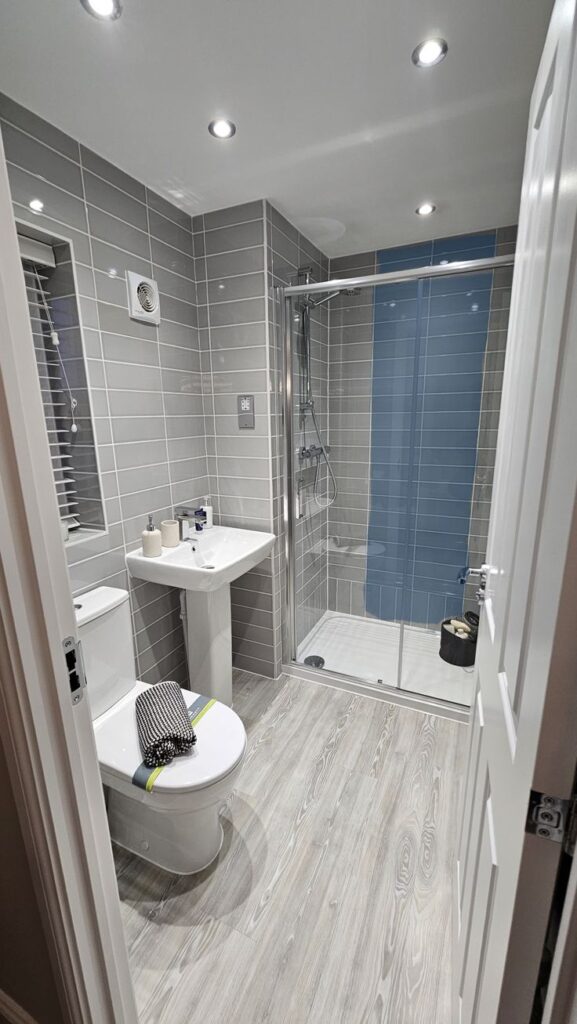
3. Moisture Intrusion (The Hidden Destroyer)
Bathrooms generate massive amounts of moisture:
- Hot showers create 1+ gallon of steam
- Poor ventilation traps humidity
- Steam penetrates outlet boxes and light fixtures
- Condensation forms inside walls
How moisture causes breaker trips:
- Steam enters outlet box through gaps around cover plate
- Condensation forms on wire nuts and terminals
- Water creates path for current to leak to ground
- GFCI detects leakage and trips
- Repeated moisture causes corrosion, increasing resistance and heat
High-risk areas:
- Coastal states (Florida, California, Washington): Salt air accelerates corrosion
- Southern states (Texas, Louisiana, Mississippi): Year-round humidity
- Older homes (pre-1980): No vapor barriers, cloth-insulated wiring
- Basement bathrooms: Groundwater seepage + humidity
The danger: Moisture + electricity = corrosion. Corroded connections create resistance. Resistance creates heat. Heat degrades insulation. Exposed wires + water = electrocution or fire.
Signs of moisture damage:
- Rust on outlet screws or cover plates
- Black or green corrosion on wires
- Outlets that feel damp or cold
- Musty smell near outlets
- Paint bubbling near outlets or switches
📞 Moisture in your bathroom electrical? Call for inspection:
4. Faulty or Aging Appliances
The scenario: Your hair dryer is 8 years old. The cord is frayed near the plug. Every time you use it, the bathroom breaker trips.
Common bathroom appliance culprits:
| Appliance | Failure Mode | Danger Level |
|---|---|---|
| Hair dryer | Frayed cord, damaged heating element | 🔥🔥🔥 High |
| Curling iron | Cracked handle, exposed wiring | 🔥🔥🔥 High |
| Electric shaver | Water ingress, battery failure | 🔥🔥 Medium |
| Space heater | Overheating, tip-over switch failure | 🔥🔥🔥🔥 Extreme |
| Towel warmer | Heating element shorting | 🔥🔥🔥 High |
| Whirlpool tub | Pump motor failing, water in junction box | 🔥🔥🔥🔥 Extreme |
The CPSC recall database shows:
- 187+ hair dryer recalls since 2010 for fire/shock hazards
- 43 electric heater recalls for bathroom use
- 92 whirlpool/jetted tub recalls for electrocution risk
How to test: Unplug everything. Reset breaker. Plug in appliances one by one. If it trips with a specific device, throw that device away immediately. Do not attempt repair.
⚠️ Never use a damaged appliance in the bathroom. Water + exposed wiring = guaranteed electrocution risk.
📞 Appliance causing trips? Call for circuit diagnosis
5. Outdated or Dangerous Wiring
The scenario: Your home was built in 1965. The bathroom has:
- Aluminum wiring (1960s-1970s): Expands/contracts, causing loose connections
- No GFCI protection (pre-1975): No protection against ground faults
- Cloth-insulated wiring (pre-1950s): Insulation crumbles, exposing wires
- Knob-and-tube wiring (pre-1950s): No ground wire, deteriorating insulation
The danger by decade:
| Era | Wiring Type | Risk Level | Common Problem |
|---|---|---|---|
| Pre-1950 | Knob-and-tube | 🔥🔥🔥🔥🔥 | No ground, brittle insulation |
| 1950-1965 | Early Romex | 🔥🔥🔥🔥 | Cloth insulation, no ground |
| 1965-1975 | Aluminum wiring | 🔥🔥🔥🔥 | Loose connections, overheating |
| 1975-1993 | Copper Romex | 🔥🔥🔥 | No GFCI required yet |
| 1993+ | Modern Romex | 🔥🔥 | Usually code-compliant |
Aluminum wiring warning signs:
- Warm or vibrating outlets
- Flickering lights when appliances run
- Discolored outlet covers
- Burning smell from outlets
- Breakers that trip on hot days
**The CPSC estimates aluminum wiring causes **one fire per 50 homes per year—and bathrooms are ground zero because of moisture + high-wattage appliances.
🚨 If your home has aluminum wiring and your bathroom breaker trips, call an electrician immediately: [رقم MarketCall]
How to Safely Troubleshoot a Bathroom Breaker
⚠️ WARNING: Bathrooms are uniquely dangerous for DIY electrical work. If you’re not 100% confident, call a professional. Water + electricity = death.
Step 1: Cut ALL Power
Go to your electrical panel and turn off the main breaker, not just the bathroom breaker. This eliminates all risk while troubleshooting.
Step 2: Inspect for Visible Damage
With a flashlight, check bathroom outlets for:
- Burn marks or blackening
- Melted plastic
- Rust or green corrosion on screws
- Cracked or loose cover plates
- Water stains or moisture
If you see damage, STOP. Do not restore power. Call an electrician.
Step 3: Check the GFCI
Press the TEST button, then RESET. If it won’t reset:
- The GFCI is worn out, OR
- There’s an active ground fault, OR
- The circuit is overloaded
Do not bypass the GFCI.
Step 4: Test with Everything Unplugged
Reset the breaker with NOTHING plugged in. If it trips immediately, you have a wiring problem.
Step 5: Plug In Appliances One by One
If the breaker stays on with nothing plugged in, add appliances individually:
- Hair dryer (start on LOW)
- Curling iron
- Electric shaver
- Exhaust fan
If it trips with a specific appliance, that appliance is faulty. Throw it away.
Step 6: If It Trips Again, Call a Pro
If the breaker trips with normal use, or trips immediately after resetting, you have:
- A ground fault in wiring
- Moisture in outlet boxes
- Aluminum wiring issues
- An overloaded circuit needing upgrade
📞 Bathroom breaker still tripping? Call 24/7: [رقم MarketCall]
When to Call an Emergency Electrician (Don’t Wait!)
| Danger Sign | Why It’s URGENT |
|---|---|
| Burning smell | Wires actively overheating. Fire is imminent. |
| Breaker trips immediately | Active short circuit or ground fault. Each reset risks fire/shock. |
| GFCI won’t reset | Real ground fault exists. Electrocution risk. |
| Warm or hot outlets | Loose connections creating heat inside walls. |
| Sparks from outlets | Active arcing. Turn off main breaker NOW. |
| Buzzing/humming | Loose connections arcing. Silent fire hazard. |
| Rust on outlets | Moisture has penetrated electrical system. |
| Aluminum wiring | Known fire hazard. Needs professional retrofit. |
| No GFCI in bathroom | Code violation + electrocution risk. Upgrade immediately. |
🚨 For burning smells, sparks, or hot outlets: Turn off the MAIN breaker and call 911 if you see flames. Then call our emergency electricians: [رقم MarketCall]
Cost to Fix Bathroom Breaker Problems (2026 National Averages)
| Repair/Service | Average Cost | Time | When Needed |
|---|---|---|---|
| GFCI outlet replacement | $150 – $350 | 1-2 hours | Worn/faulty GFCI |
| Breaker replacement | $150 – $300 | 30-60 min | Single bad breaker |
| Circuit diagnosis | $100 – $250 | 1-2 hours | Finding cause of trips |
| Dedicated 20-amp bathroom circuit | $600 – $1,200 | 4-6 hours | Overloaded/shared circuit |
| Aluminum wiring pigtail | $300 – $500/outlet | 2-3 hours | Aluminum wiring retrofit |
| Full bathroom rewiring | $2,000 – $5,000 | 1-3 days | Old/dangerous wiring |
| Panel upgrade (100A to 200A) | $2,000 – $4,500 | 1-2 days | Outdated/undersized panel |
| Emergency service call | $150 – $300 + labor | Same day | Nights, weekends, holidays |
💡 Many electricians offer FREE bathroom electrical safety inspections. Ask about package deals for GFCI upgrades + dedicated circuits.
📞 Get upfront pricing with no hidden fees: [رقم MarketCall]
How to Prevent Bathroom Breaker Trips (Safety Checklist)
1. Never Use Damaged Appliances
Throw away any bathroom appliance with:
- Frayed cords
- Cracked handles
- Exposed wiring
- Burn marks
- Water damage
The $30 hair dryer isn’t worth your life.
2. Keep Appliances Away From Water
- Use hair dryer 3+ feet from sink/tub
- Never charge phones near water
- Don’t place radios or speakers on sink edges
- Keep extension cords off wet floors
3. Upgrade to Modern GFCI Outlets
- Self-testing GFCIs automatically test monthly
- Weather-resistant GFCIs for high-humidity areas
- Tamper-resistant GFCIs if children are present
- LED indicator GFCIs show status at a glance
4. Install a Dedicated Bathroom Circuit
Modern NEC code requires:
- 20-amp GFCI circuit for bathroom outlets
- Separate circuit for exhaust fan
- Separate circuit for lighting
If your bathroom shares a circuit with bedrooms or hallways, upgrade immediately.
5. Improve Ventilation
- Run exhaust fan during shower + 20 minutes after
- CFM rating: Minimum 50 CFM, or 1 CFM per square foot
- Humidity sensor: Automatically runs fan until humidity drops
- Window ventilation: Open window during/after showers if possible
Proper ventilation reduces moisture by 80%, preventing corrosion and GFCI nuisance trips.
6. Schedule Annual Inspections
A licensed electrician can:
- Test GFCI function with calibrated equipment
- Tighten connections before they loosen
- Identify moisture intrusion with thermal imaging
- Check for aluminum wiring degradation
- Verify code compliance
Think of it as an annual physical for your bathroom’s electrical system.
Frequently Asked Questions (FAQ)
Why does my bathroom breaker trip when I use the hair dryer?
Because your hair dryer draws 1,500-1,800 watts. Combined with other devices on the same circuit, you exceed the breaker’s capacity. Use the LOW setting, or install a dedicated 20-amp bathroom circuit.
Can I use a regular outlet in the bathroom if it has a GFCI breaker?
No. The NEC requires GFCI protection for ALL bathroom outlets. A GFCI breaker protects the circuit, but individual GFCI outlets provide localized protection and easier reset access.
Why does my bathroom GFCI trip when it rains?
Water is entering an outdoor outlet, light fixture, or the panel itself. This creates a ground fault. You need weatherproof covers and possibly GFCI relocation.
Is it safe to use a space heater in the bathroom?
No—unless it’s specifically designed for bathroom use. Standard space heaters lack GFCI protection and tip-over switches required for wet environments. Never use a standard space heater near water.
How much does it cost to add a dedicated bathroom circuit?
$600 – $1,200 for a standard installation. This includes running new 12-gauge wire from the panel, installing a 20-amp GFCI outlet, and code-compliant grounding.
Why does my bathroom breaker trip at night?
Nighttime is when exhaust fans, heating elements, and electric water heaters often cycle simultaneously. If your bathroom shares a circuit with other rooms, nighttime usage overloads it.
Can I replace a bathroom GFCI myself?
Only if you’re experienced with electrical work. GFCI wiring is complex (line vs. load connections). Incorrect installation removes protection and can cause electrocution. When in doubt, hire a pro.
How long do bathroom GFCIs last?
10-15 years under normal conditions. High humidity, frequent testing, and power surges shorten lifespan. Replace if the TEST/RESET buttons stick or the outlet feels loose.
Is aluminum wiring in the bathroom dangerous?
Extremely. Aluminum expands/contracts more than copper, causing loose connections that overheat. Moisture accelerates corrosion. All aluminum wiring needs professional retrofitting with copper pigtails.
What should I do if my bathroom breaker trips while I’m in the shower?
Stay in the shower if water is running—don’t touch anything electrical. If the lights go out, carefully exit the shower, dry off completely, then check the panel. Never touch electrical panels with wet hands or while standing on wet floors.
Final Warning: Bathrooms Kill More Americans Than Sharks
The CPSC reports 400+ electrocutions annually in U.S. homes, with bathrooms being the #1 location. A tripping bathroom breaker is not an inconvenience—it’s a smoke alarm for electrocution and fire.
The homeowners who ignore bathroom breaker trips are the ones who end up with:
- Electrocution injuries or death
- $50,000+ in fire and water damage
- Destroyed bathrooms requiring full renovation
- Insurance claims denied due to code violations
The homeowners who call at the first sign of trouble spend a few hundred dollars and bathe safely for decades.
📞 Don’t gamble with your family’s safety. Call our 24/7 national emergency electricians now: 866-227-8161
Licensed. Insured. Background-checked. Dispatched to your area within 60 minutes. Serving all 50 states.