
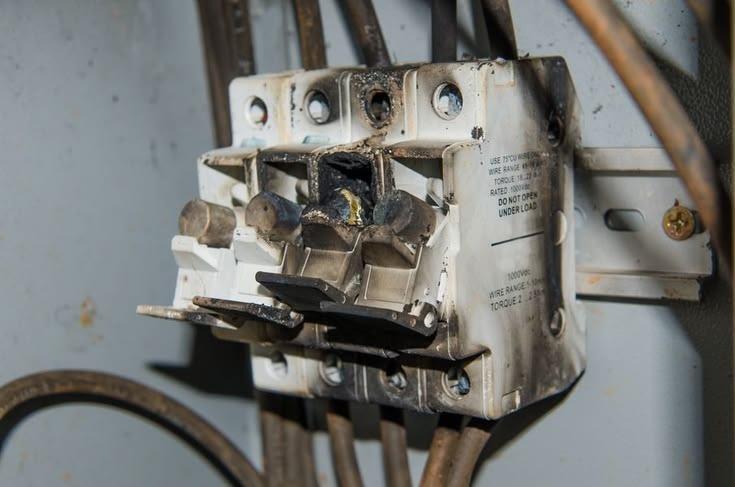
Why Does My Kitchen Breaker Keep Tripping?
If your Circuit Breaker Keeps Trippingtripping in the kitchen, you’re dealing with one of the most common—and most dangerous—electrical problems in American homes. The kitchen is the #1 room where breakers trip because it uses more high-wattage appliances than any other space in your house.
📞 Call our 24/7 emergency electricians now: [رقم MarketCall]
Available nationwide. Licensed contractors dispatched to your area.
A circuit breaker tripping designed to shut off power when something isn’t right, helping to prevent electrical fires, appliance damage, or worse. When it trips repeatedly, it’s your home’s way of telling you there’s a problem that needs attention. Ignoring a tripped breaker can lead to overheated wires, loss of power to important appliances, or even a complete system failure. Whether the issue is a faulty appliance, aging wiring, or an overloaded panel, the safest and most effective fix often requires professional help. In this guide, you’ll learn why circuit breakers trip, how to troubleshoot the issue, and when it’s time to call an electrician.
The Kitchen = Highest Electrical Load in Your Home
Think about what runs in your kitchen simultaneously during a typical morning:
- Coffee maker (800-1,200 watts)
- Toaster oven (1,000-1,500 watts)
- Microwave (1,000-1,200 watts)
- Refrigerator cycling on (700 watts)
- Blender (300-500 watts)
- Dishwasher heating water (1,500 watts)
Total potential load: 5,000+ watts
A standard 20-amp kitchen circuit can only handle 2,400 watts safely. When everything hits at once, your breaker trips to prevent the wires from overheating and starting a fire inside your walls.
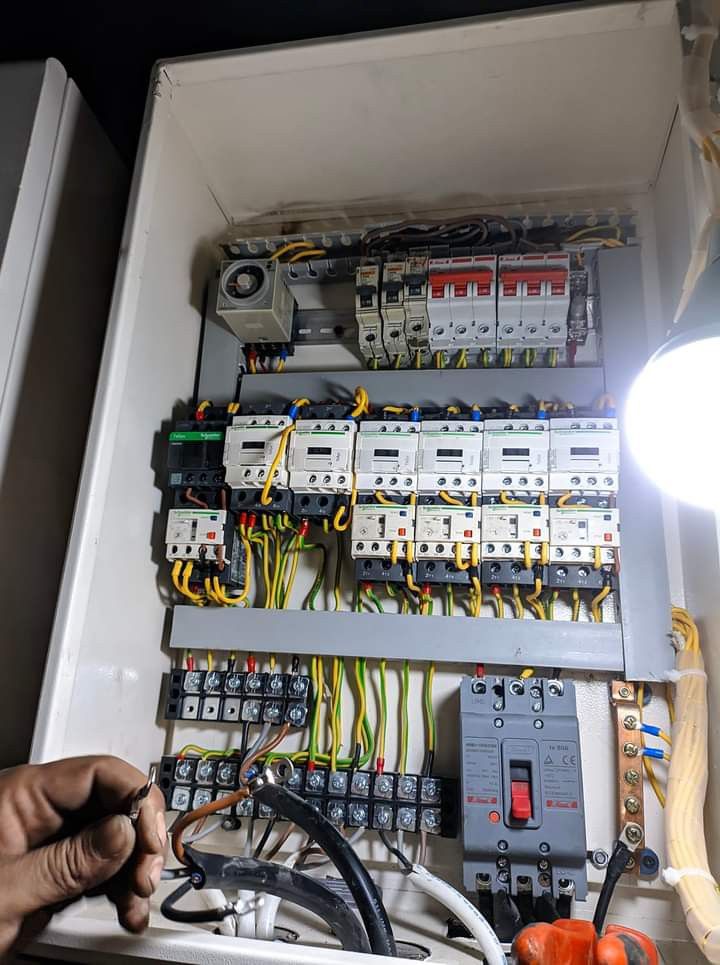
5 Reasons Your Kitchen Breaker Keeps Tripping
1. Appliance Overload (Most Common)
The scenario: You plug the microwave into the same outlet as the toaster oven, while the coffee maker runs on the adjacent outlet—both on the same 20-amp circuit.
The math:
- Microwave: 1,200W
- Toaster oven: 1,500W
- Coffee maker: 1,000W
- Total: 3,700W on a 2,400W circuit = BREAKER TRIPS
The danger: Many homeowners “solve” this by upgrading to a 30-amp breaker without upgrading the wiring. This is a fire hazard. The wires in your walls are rated for 20 amps. A 30-amp breaker allows them to overheat to 2,000°F before tripping.
✅ The fix: Spread appliances across multiple circuits, or install a dedicated 20-amp circuit for high-wattage appliances.
📞 Need a new kitchen circuit? Call: [رقم MarketCall]
2. Faulty Major Appliance
The scenario: Your breaker trips every time you run the dishwasher, or when the refrigerator compressor kicks on.
Common culprits:
- Dishwasher: Heating element shorting out (1,500W + water = danger)
- Refrigerator: Compressor motor failing, drawing excessive current
- Garbage disposal: Jammed motor or worn bearings
- Microwave: Magnetron or capacitor failing
- Electric range/oven: Heating element shorting to ground
How to identify it: Unplug everything on the circuit. Reset the breaker. Plug in appliances one by one. If it trips when a specific appliance turns on, that appliance is faulty.
⚠️ Warning: A faulty appliance with a ground fault can electrocute you if you touch it while standing on a wet kitchen floor.
📞 Appliance causing trips? Call for diagnosis: [866-227-8161
3. GFCI Outlet Problems
The scenario: Your kitchen GFCI outlet keeps tripping, or the breaker for the GFCI circuit trips repeatedly.
Why kitchens need GFCI:
Since 1987, the National Electrical Code (NEC) requires GFCI protection within 6 feet of a kitchen sink. Since 2014, all kitchen outlets serving countertop areas must be GFCI-protected.
Common GFCI problems:
- Moisture: Steam from dishwasher, boiling water, or sink splashing causes nuisance tripping
- Worn GFCI: Internal mechanism fails after 10-15 years
- Faulty appliance: Appliance with ground fault triggers GFCI
- Shared neutral: Incorrect wiring causes GFCI to trip when other circuits are used
The danger: A GFCI that trips repeatedly is often warning you of a real ground fault that could shock you or start a fire.
✅ The fix: Replace worn GFCI outlets ($150-$300). If the problem persists, you have a wiring issue that needs professional diagnosis.
📞 GFCI keeps tripping? Call: [رقم MarketCall]
4. Outdated or Damaged Wiring
The scenario: Your home was built before 1990, and the kitchen breaker trips more often in summer or when using multiple appliances.
Common wiring issues in older kitchens:
- Aluminum wiring (1960s-1970s): Expands and contracts, causing loose connections that overheat
- Knob-and-tube wiring (pre-1950s): No ground wire, insulation deteriorating
- 14-gauge wire on 20-amp breaker: Wire too thin for the load, overheating risk
- Backstabbed outlets: Wires pushed into spring connections loosen over time
- Damaged insulation: Rodents, nails, or heat damage expose wires
The danger: Loose or damaged connections create resistance. Resistance creates heat. Heat builds up inside walls until it ignites insulation or framing. This is how 51,000 electrical fires start every year in the U.S.
⚠️ Warning signs:
- Outlets feel warm or hot
- Burning smell near outlets or switches
- Discolored outlet covers
- Buzzing or sizzling sounds
- Lights flicker when appliances turn on
🚨 If you smell burning, turn off the main breaker and call an emergency electrician: [رقم MarketCall]
5. Shared Circuits with Other Rooms
The scenario: Your kitchen breaker also powers the living room, dining room, or garage. When someone runs a vacuum or space heater while you’re cooking, the breaker trips.
Why this happens:
In older homes (pre-1980), electricians often ran one circuit to serve multiple rooms to save money. A single 15-amp circuit might power:
- Kitchen countertop outlets
- Living room outlets
- Dining room light fixture
- Hallway outlets
The danger: You’re not just overloading the kitchen—you’re overloading the entire circuit. The wires run through walls, ceilings, and floors, heating up throughout their entire length.
✅ The fix: Install dedicated 20-amp circuits for the kitchen, separate from other rooms. Modern kitchens require at least two dedicated 20-amp circuits for countertop areas, plus dedicated circuits for:
- Refrigerator
- Dishwasher
- Garbage disposal
- Electric range/oven
- Microwave (if built-in)
📞 Need circuit upgrades? Free estimate: [866-227-8161
How to Troubleshoot a Kitchen Breaker That Keeps Tripping
Follow these steps in order. Stop immediately if you see sparks, smell burning, or the breaker feels hot.
Step 1: Unplug Everything
Remove every appliance, device, and charger from all kitchen outlets on the tripped circuit.
Step 2: Check for Visible Damage
Inspect outlets and switches for:
- Burn marks or blackening
- Melted plastic
- Warm surfaces
- Burning smells
- Sparks
If you see damage, STOP. Call an electrician.
Step 3: Reset the Breaker
Push the breaker firmly to “OFF” (you’ll feel a click), then to “ON.” Stand to the side of the panel.
Step 4: Plug In Appliances One by One
Reconnect appliances individually, waiting 2-3 minutes between each. If the breaker trips when a specific appliance turns on, that appliance is likely faulty.
Step 5: Test Different Combinations
Try running the microwave alone. Then the toaster oven alone. Then both together. This identifies if the problem is overload vs. a specific device.
Step 6: If It Trips Again, Call a Pro
If the breaker trips with normal use, or trips immediately after resetting, you have a wiring problem, short circuit, or bad breaker that requires professional diagnosis.
📞 Breaker still tripping? Call 24/7: [رقم MarketCall]
When to Call an Emergency Electrician (Don’t Wait!)
| Danger Sign | Why It’s Urgent |
|---|---|
| Burning smell | Wires actively overheating. Fire risk is imminent. |
| Breaker trips immediately | Short circuit or bad breaker. Each reset risks fire. |
| Warm or hot outlets | Loose connections creating heat inside walls. |
| Sparks from outlets | Active arcing. Turn off main breaker immediately. |
| GFCI won’t reset | Ground fault in wiring or appliance. Shock hazard. |
| Buzzing from panel | Loose connections arcing. Silent fire hazard. |
| Dimming lights | Panel overloaded. Needs upgrade. |
🚨 For burning smells or sparks: Turn off the MAIN breaker and call 911 if you see flames. Then call: [رقم MarketCall]
Cost to Fix Kitchen Breaker Problems (2026 National Averages)
| Repair/Service | Average Cost | Time | When Needed |
|---|---|---|---|
| Breaker replacement | $150 – $300 | 30-60 min | Single bad breaker |
| GFCI outlet replacement | $200 – $400 | 1-2 hours | Faulty GFCI |
| New 20-amp circuit | $500 – $900 | 3-5 hours | Overloaded kitchen |
| Dedicated appliance circuit | $600 – $1,200 | 4-6 hours | Dishwasher, fridge, etc. |
| Panel upgrade (100A to 200A) | $2,000 – $4,500 | 1-2 days | Outdated panel |
| Kitchen rewiring | $3,000 – $8,000 | 2-5 days | Old/dangerous wiring |
| Emergency service call | $150 – $300 + labor | Same day | Nights, weekends, holidays |
💡 Many electricians offer FREE kitchen safety inspections with repair work. Ask about package deals for multiple circuit upgrades.
📞 Get upfront pricing: [866-227-8161
How to Prevent Kitchen Breakers From Tripping
1. Spread Out Appliances
Don’t run the microwave, toaster oven, air fryer, and coffee maker simultaneously. Use outlets on different circuits.
2. Know Your Circuit Map
Label your electrical panel so you know which breaker controls which kitchen outlets. This helps you balance loads intentionally.
3. Upgrade to Dedicated Circuits
Modern kitchens need:
- 2× 20-amp countertop circuits (GFCI-protected)
- 1× 20-amp refrigerator circuit (dedicated)
- 1× 20-amp dishwasher circuit (dedicated)
- 1× 20-amp disposal circuit (dedicated)
- 1× 240V range/oven circuit (40-50 amp)
4. Replace Old Appliances
A failing refrigerator compressor or dishwasher heating element can trip breakers. If an appliance is 10+ years old and causing trips, replace it.
5. Schedule Annual Inspections
A licensed electrician can tighten connections, check for corrosion, and identify problems before they cause trips—or fires.
Frequently Asked Questions (FAQ)
Why does my kitchen breaker trip when I use the microwave and toaster oven together?
Because you’re overloading the circuit. A microwave (1,200W) + toaster oven (1,500W) = 2,700W on a 2,400W circuit. Spread them across different outlets on different circuits, or run them at different times.
Can I just upgrade my kitchen breaker to 30 amps?
No. The wires in your walls are rated for 20 amps. A 30-amp breaker allows them to overheat and start a fire before tripping. Never upgrade a breaker without upgrading the wiring.
Why does my GFCI outlet in the kitchen keep tripping?
Moisture, worn GFCI, or faulty appliance. Kitchen GFCIs trip from steam, splashing, or aging. If it won’t reset, you have a ground fault that needs professional diagnosis.
How much does it cost to add a new kitchen circuit?
$500 – $900 for a standard 20-amp circuit. $600 – $1,200 for a dedicated appliance circuit. This is the safest long-term solution for overloaded kitchens.
Is a buzzing breaker in the kitchen dangerous?
Yes. Buzzing indicates loose connections or arcing inside the panel. This is a fire hazard. Turn off the main breaker and call an electrician immediately.
Why does my kitchen breaker trip at night?
Nighttime is when dishwashers, dryers, and AC often run simultaneously. If your kitchen shares a circuit with other rooms, nighttime usage overloads it. You need dedicated circuits.
Can a bad refrigerator cause the kitchen breaker to trip?
Yes. A failing compressor draws excessive current when starting up. If your breaker trips every time the fridge cycles on, the compressor is likely failing.
How many outlets can be on a 20-amp kitchen circuit?
As many as you want, but the total load can’t exceed 2,400 watts. The NEC requires at least two 20-amp circuits for kitchen countertops, with GFCI protection.
Do I need an electrician to replace a kitchen breaker?
Yes, unless you’re a licensed electrician. Breakers must match your panel’s manufacturer and specifications. Incorrect installation can cause electrocution or fire.
Why does my kitchen breaker trip after a storm?
Power surge damage. Lightning or grid switching can damage breakers and appliances. Install whole-home surge protection ($300-$800) and have your panel inspected after major storms.
Final Warning: Kitchen Electrical Fires Are Devastating
The kitchen is where most house fires start. The U.S. Fire Administration reports that cooking is the #1 cause of home fires, but electrical distribution systems are a close second. A tripping breaker in your kitchen is not an inconvenience—it’s a fire alarm.
The homeowners who ignore kitchen breaker trips are the ones who end up with:
- $50,000+ in fire and smoke damage
- Destroyed appliances and cabinets
- Family injuries—or worse
- Insurance claims denied due to neglected maintenance
The homeowners who call at the first sign of trouble spend a few hundred dollars and cook dinner safely for years to come.
📞 Don’t wait for the third trip. Call our 24/7 national emergency electricians now: 866-227-8161
Licensed. Insured. Background-checked. Dispatched to your area within 60 minutes.