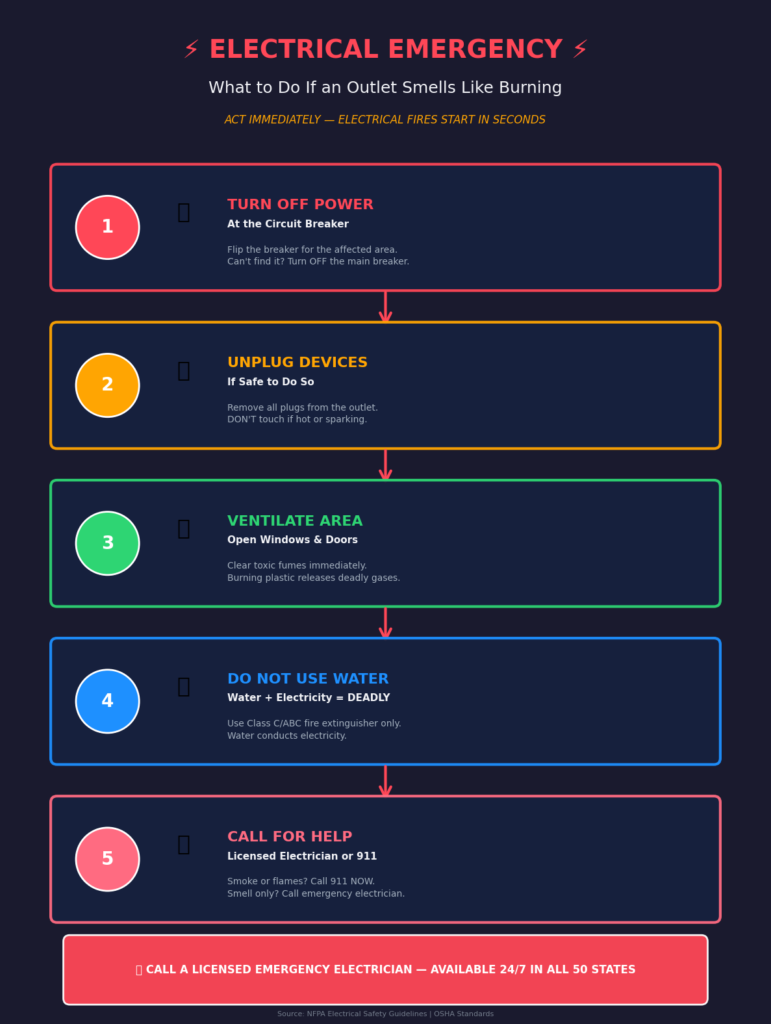
what to do if outlet smells like burning” If an outlet smells like burning, act fast. Follow these emergency steps: turn off power, unplug devices, ventilate, and call a licensed electrician. Don’t ignore it—electrical fires start in seconds.
Smelling something burning from your outlet is one of the most serious electrical warning signs a home can give you. But knowing why it’s happening is only half the battle — you also need to know exactly what to do in the moment to keep your family safe. Electrical fires can escalate from a faint smell to visible flames in as little as 30 seconds, and the wrong move can make things worse. That’s why we’ve put together a step-by-step emergency guide covering what to do if an outlet smells like burning — including how to safely turn off power, when to call 911 versus an electrician, and what not to do while waiting for help to arrive.
⚡ Is a Burning Smell From an Outlet an Emergency?
Yes—absolutely. A burning smell from an electrical outlet is one of the most serious warning signs your home can give you. It means something in your electrical system is overheating, melting, or potentially catching fire inside your walls.
According to the National Fire Protection Association (NFPA), electrical fires cause an estimated 51,000 home fires annually in the U.S., resulting in approximately 470 deaths and over $750 million in property damage every year.
The danger? The source is usually hidden behind the outlet plate or inside the wall cavity where you can’t see it. The wiring could be smoldering against wood framing, creating conditions for a fire to spread undetected.
Bottom line: If you smell burning from an outlet, don’t wait to see if it goes away. Act immediately.
🚨 5 Emergency Steps: What to Do RIGHT NOW
Step 1: Turn Off Power at the Circuit Breaker
This is your #1 priority. Head to your electrical panel and flip the circuit breaker for the area where the smell is coming from.
Can’t find the right breaker? Turn off the main breaker to cut power to your entire home. It’s better to sit in the dark than risk a fire.
Never reset a breaker that smells burnt. This can worsen the damage or start a fire.
Step 2: Unplug All Devices (If Safe)
If you can reach the outlet without touching anything hot or sparking, unplug all devices connected to it.
Don’t touch the outlet itself if it feels warm, looks discolored, or you see sparks.
If the plug or cord feels hot, leave it alone and call an electrician.
Step 3: Ventilate the Area
Open windows and doors to clear out toxic fumes. Burning electrical components release dangerous chemicals including:
Aldehyde gases — respiratory irritants
PVC insulation fumes — can include chlorine gas
⚠️ Warning: These fumes spread faster than the actual fire. Don’t underestimate them.
Step 4: Do NOT Use Water
Water + electricity = deadly combination. If you have a fire extinguisher, make sure it’s rated Class C or ABC for electrical fires.
Step 5: Call a Licensed Electrician (or 911)
Situation
Who to Call
Smell only, no smoke/flames
Licensed emergency electrician
Smoke, sparks, or visible fire
911 immediately, then evacuate
Smell spreading to other rooms
911 + electrician
Discoloration on wall near outlet
911 + evacuate
Do not turn the power back on until a licensed electrician has inspected and repaired the issue.
🔍 What Causes a Burning Smell From an Outlet?
Understanding the cause helps prevent it from happening again. Here are the most common culprits:
1. Overloaded Circuits
Plugging too many devices into one outlet generates excess heat. This is especially common with space heaters, hair dryers, and high-wattage appliances.
2. Loose Connections
Loose wires inside the outlet create resistance, which produces localized heat. This can melt insulation and damage components over time.
3. Faulty or Aging Wiring
Old wiring (especially aluminum wiring or knob-and-tube systems) can’t handle modern electrical demands. Homes over 40 years old are at higher risk.
4. Faulty Appliances
Sometimes the problem isn’t the outlet—it’s the device plugged into it. Damaged cords, worn motors, or deteriorating insulation can overheat and melt.
5. Improper Installation
Outlets installed incorrectly can cause poor connections and overheat under normal use. This is why the NFPA recommends having all electrical work done by a qualified electrician.
⚠️ Warning Signs Your Outlet Is About to Catch Fire
Don’t wait for the smell. Watch for these red flags:
Warning Sign
What It Means
🔥 Hot outlet or switch plate
Serious overheating inside
💡 Flickering or dimming lights
Overloaded circuit or loose wiring
🔊 Buzzing or crackling sounds
Electrical arcing — fire risk
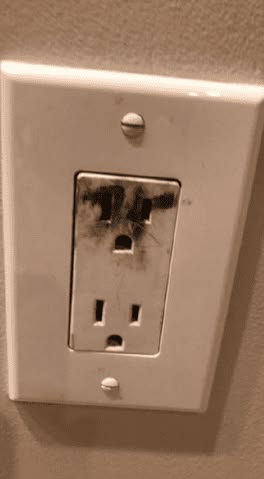
🎨 Discoloration or scorch marks
Heat damage has already occurred
⚡ Frequent breaker trips
Circuit is overloaded or faulty
🐟 Fishy odor
Overheating electrical components (yes, really)
If you notice ANY of these signs, treat it as an emergency.
🏠 What NOT to Do During an Electrical Emergency
❌ Don’t ignore the smell — it won’t fix itself ❌ Don’t reset tripped breakers repeatedly — this is a warning, not a glitch ❌ Don’t touch exposed or damaged wires — electrocution risk ❌ Don’t attempt DIY repairs — electricity kills; leave it to professionals ❌ Don’t use the outlet again — even if the smell fades, the hazard remains
📞 When to Call an Emergency Electrician vs. 911
Call 911 If…
Call an Electrician If…
You see smoke or flames
Burning smell only
Smell is spreading
Outlet is warm but not hot
Wall near outlet is discolored
Breaker tripped once
You feel unsafe staying in the home
You need inspection after the incident
Emergency electricians are available 24/7. Most offer same-day service for burning smells because they know the risk.
💰 How Much Does Emergency Electrical Service Cost?
Service
Typical Cost (U.S. National Average)
Emergency service call (after hours)
$150 – $300
Outlet inspection & diagnosis
$100 – $200
Outlet replacement
$150 – $350
Wiring repair (per outlet)
$200 – $500
Full electrical inspection
$250 – $400
💡 Pro tip: Many homeowners insurance policies cover emergency electrical repairs. Check your policy.
🛡️ How to Prevent Future Electrical Fires
Avoid overloading outlets — one heat-producing appliance per receptacle at a time
Replace frayed cords immediately — electrical tape is temporary only
Schedule annual electrical inspections — especially if your home is 40+ years old
Install AFCI and GFCI breakers — modern safety devices that shut off power before fires start
Use surge protectors — but don’t daisy-chain them
Never run cords under carpets or across doorways — fire hazard + tripping hazard
❓ Frequently Asked Questions
Can a single outlet cause a house fire?
Yes. A single outlet with damaged wiring, loose connections, or overload can ignite surrounding materials inside the wall.
Why does my outlet smell like fish?
A fishy smell from an outlet is actually a known sign of overheating electrical components. The odor comes from the breakdown of heat-resistant chemicals in older insulation materials. If there’s no seafood in sight, check your outlets immediately.
Is it safe to sleep if an outlet smells like burning?
No. Evacuate the area and call an emergency electrician. Electrical fires can start inside walls and spread while you sleep.
Will the burning smell go away on its own?
Sometimes the smell fades as the component cools, but the underlying problem remains. Do not use the outlet again until inspected by a licensed electrician.
How fast can an electrical fire start?
An electrical fire can escalate from a burning smell to visible flames in as little as 30 seconds to a few minutes. Speed matters.
🔗 Related: Why Is My Outlet Burning?
For a complete breakdown of all causes — from overloaded circuits to faulty wiring to aging electrical panels — see our full guide: [Burning Smell From Outlet: Complete Causes & Prevention Guide]
🆘 Need Help Right Now?
If you’re dealing with a burning smell from an outlet right now, don’t wait.
[📞 Call a Licensed Emergency Electrician Near You]
Our network of licensed, insured electricians across the U.S. is available 24/7 for emergency electrical repairs. Same-day service. Free estimates. Your safety comes first.
⚡ Available in all 50 states. No job too small. Emergency response guaranteed.