
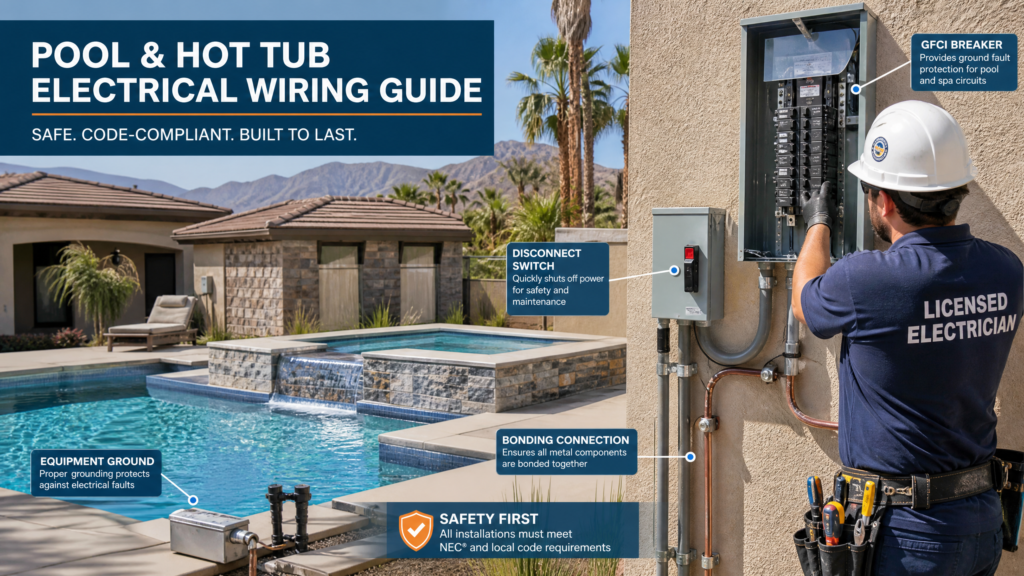
Pool and Hot Tub Wiring: The Complete Guide for California and Nevada Homeowners Water and electricity don’t mix, yet every summer, homeowners across California and Nevada add pools and hot tubs without understanding what’s happening behind the breaker panel. Pool electrical wiring safety isn’t just a code requirement—it’s the difference between a backyard oasis and a potential tragedy. Electric shock drowning (ESD) is real, preventable, and caused by improper pool wiring installations.
If you’re planning a pool or hot tub installation in California or Nevada this season, here’s everything you need to know before breaking ground.
Pool and Hot Tub Wiring Requirements in California and Nevada
Both California and Nevada follow the National Electrical Code (NEC) Article 680, which establishes strict requirements for all pool and spa electrical installations. Understanding these requirements is essential before you hire an electrician or attempt any work yourself.
Key Requirements for Pool Wiring
A swimming pool installation involves multiple electrical systems that must work together seamlessly. Here’s what’s required:
Dedicated Circuit for Pump and Filter
The pump and filter motor require their own dedicated circuit. This circuit cannot share power with other appliances or equipment. The circuit size depends on the motor’s horsepower, typically ranging from 15 to 30 amps for residential pools.
Underwater Lighting
If you’re installing underwater lighting, it must be wired to either low-voltage fixtures (12V or less) or line-voltage fixtures with proper sealing and GFCI protection. All lighting fixtures must be bonded to the pool’s equipotential bonding system.
Bonding and Grounding
All metal components within 5 feet of the pool water—including ladders, railings, light fixtures, pump housing, and filter equipment—must be bonded together and connected to the main grounding system. This creates an equipotential surface that prevents dangerous voltage differences.
Panel Upgrade Considerations
Most older homes in California and Nevada weren’t designed with pool electrical loads in mind. Your main electrical panel may need an upgrade to handle the additional power demand. A licensed electrician will assess your current panel capacity and recommend upgrades if necessary.
Hot Tub Electrical Installation Requirements
Hot tubs have more stringent electrical requirements than pools because they operate at higher voltages and draw significant current.
240V Dedicated Circuit
Most full-size hot tubs require a dedicated 240-volt circuit. This circuit cannot be shared with any other appliance or equipment. The circuit breaker size is typically 50-60 amps, depending on the manufacturer’s specifications. Some smaller “plug-and-play” hot tubs operate on 120V, but these are the exception, not the rule.
Disconnect Switch
A disconnect switch must be installed within sight of the hot tub but at least 5 feet away from the water’s edge. This switch allows you to quickly cut power in an emergency. The disconnect must be readily accessible and clearly labeled.
GFCI Protection
All hot tub circuits must have Ground Fault Circuit Interrupter (GFCI) protection. GFCI devices detect even small electrical leaks and shut off power instantly, protecting users from electric shock. In California and Nevada, GFCI protection is mandatory for all pool and spa circuits.
Proper Bonding and Grounding
Like pools, all metal components within 5 feet of the hot tub must be bonded together and connected to the grounding system. This includes the tub frame, any metal railings, nearby light fixtures, and the pump housing.
The Hidden Danger: Electric Shock Drowning (ESD)
Electric shock drowning is perhaps the most serious risk associated with improper pool wiring. ESD occurs when faulty wiring introduces AC voltage into pool or hot tub water. Swimmers experience sudden muscle paralysis and drown—often in their own backyard—without anyone realizing what’s happening.
According to the Electric Shock Drowning Prevention Association, ESD incidents are almost always caused by:
- Improper bonding of metal components
- Grounding errors in the electrical system
- Deteriorating pool wiring that develops faults over time
- Faulty equipment connected to the pool
The terrifying aspect of ESD is that it doesn’t always trigger a breaker or produce visible sparks. Sometimes faulty wiring silently energizes the water, creating an invisible hazard. This is why professional installation and regular inspection are non-negotiable.
The good news: ESD is 100% preventable with correct installation and regular maintenance. Hiring a licensed electrician who understands NEC Article 680 ensures your pool or hot tub is safe for your family.
California Pool and Hot Tub Wiring Regulations
California has adopted the NEC Article 680 and incorporated it into the California Electrical Code (Title 24). Additionally, California has specific requirements:
Permits Are Mandatory
In California, any pool or hot tub electrical work requires a permit from your local building department. This includes new installations, upgrades, and repairs. Skipping the permit process can result in:
- Fines from your local building department
- Denial of insurance claims related to the installation
- Requirements to tear out and redo the work before selling your home
- No documentation that the work was performed safely and to code
Licensed Electrician Required
California law requires that all pool and hot tub electrical work be performed by a licensed electrician. Unlicensed work is illegal and voids your homeowner’s insurance coverage.
Inspection and Sign-Off
After installation, a building inspector will verify that the work meets code requirements. The inspector checks bonding, grounding, GFCI protection, and panel capacity. Only after passing inspection can the system be energized.
Outlet Distance Requirements
The California Electrical Code specifies that electrical outlets must be at least 6 feet from the pool’s edge. Outlets between 6 and 20 feet from the pool must have GFCI protection.
Nevada Pool and Hot Tub Wiring Regulations
Nevada follows similar standards to California, adopting the NEC Article 680 and enforcing strict electrical codes.
Permits and Inspections
Like California, Nevada requires permits for all pool and hot tub electrical work. Your local building department will inspect the installation to ensure compliance with the Nevada Revised Statutes and the NEC.
Licensed Electrician Requirement
Nevada law requires that pool and hot tub electrical work be performed by a licensed electrician. The Nevada State Contractors Board oversees licensing and enforces regulations.
Las Vegas Specific Requirements
Las Vegas, as Nevada’s largest city, has additional requirements through the Las Vegas Valley Water District and local building codes. If you’re installing a pool or hot tub in the Las Vegas area, consult with your local building department for specific requirements.
Common Pool and Hot Tub Wiring Mistakes to Avoid
Understanding common mistakes helps you ask the right questions when hiring an electrician and ensures the work is done correctly.
Mistake #1: Using a Standard Outlet
Many homeowners think they can plug a hot tub into a standard 120V outlet. While some small spas can operate on 120V, most full-size hot tubs require a dedicated 240V circuit. Using an undersized outlet can cause overheating, fire, or equipment damage.
Mistake #2: Sharing Circuits
Never share a pool or hot tub circuit with other appliances. A dedicated circuit ensures the equipment receives consistent, uninterrupted power and prevents overloads.
Mistake #3: Improper Bonding
Failing to bond all metal components creates voltage differences that can be deadly. Every metal object within 5 feet of the water must be bonded to the equipotential system.
Mistake #4: Inadequate GFCI Protection
GFCI protection is not optional—it’s mandatory. Ensure all circuits have GFCI breakers or GFCI outlets, and test them monthly to verify they’re working.
Mistake #5: DIY Installation
Attempting to install pool or hot tub wiring yourself is dangerous and illegal in California and Nevada. 240V mistakes don’t give second chances. A miswired circuit can electrify the water, start a fire inside your walls, or destroy expensive equipment.
Mistake #6: Skipping the Permit
Skipping the permit process might seem like a time-saver, but it creates serious problems. Your insurance may deny claims, you may face fines, and you’ll have no documentation that the work was done safely.
Pool and Hot Tub Electrical Installation Costs
Understanding typical costs helps you budget for your project and avoid overpricing.
Hot Tub Wiring Installation Costs
The cost to wire a hot tub typically ranges from $800 to $2,500, depending on several factors:
- Distance from main panel: If the hot tub is close to your main electrical panel, costs are lower. If it’s far away, you may need to run conduit a long distance, increasing labor and materials.
- Panel upgrade needs: If your main panel needs an upgrade to handle the additional load, expect to pay $1,000 to $3,000 for the upgrade.
- Local labor rates: Labor costs vary between California and Nevada, and between urban and rural areas.
- Existing wiring condition: If your home’s existing wiring is outdated or needs repairs, costs increase.
Pool Wiring Installation Costs
Pool electrical installation typically costs $1,500 to $4,000, depending on:
- Pool size and complexity
- Distance from the main panel
- Whether a subpanel is needed
- Lighting and additional features
- Local labor rates
Factors That Affect Pricing
- Permit and inspection fees: Typically $200 to $500
- Materials: Breakers, wire, conduit, and fittings can cost $300 to $1,000
- Labor: Licensed electricians charge $50 to $150 per hour
- Emergency service: If you need work done quickly, expect to pay a premium
Step-by-Step Guide to Pool and Hot Tub Electrical Installation
Here’s what you can expect when hiring a licensed electrician for your pool or hot tub installation:
Step 1: Consultation and Assessment
The electrician visits your home to assess your current electrical system, determine panel capacity, and understand your pool or hot tub requirements. They’ll provide a detailed estimate and timeline.
Step 2: Permit Application
Your electrician will help you apply for the necessary permits from your local building department. This includes submitting plans and specifications for the installation.
Step 3: Panel Evaluation
The electrician assesses whether your main panel can handle the additional load. If not, they’ll recommend and install a subpanel or upgrade your main panel.
Step 4: Circuit Installation
The electrician runs the dedicated circuit from the panel to the pool or hot tub location. This includes installing the appropriate breaker, running wire through conduit, and installing the disconnect switch (for hot tubs).
Step 5: Bonding and Grounding
All metal components are bonded together and connected to the grounding system, creating an equipotential surface.
Step 6: GFCI Installation
GFCI protection is installed on the circuit, either as a GFCI breaker in the main panel or as GFCI outlets near the equipment.
Step 7: Inspection
The building inspector verifies that all work meets code requirements. Once approved, the system can be energized.
Step 8: Testing and Commissioning
The electrician tests all systems to ensure they’re working correctly and safely. They’ll also provide you with maintenance recommendations.
Frequently Asked Questions About Pool and Hot Tub Wiring
Q: Can I install a pool or hot tub electrical system myself?
A: No. In California and Nevada, pool and hot tub electrical work must be performed by a licensed electrician. Unlicensed work is illegal and voids your homeowner’s insurance.
Q: How often should I have my pool or hot tub electrical system inspected?
A: The National Electrical Code recommends annual inspections. If you notice any signs of damage or deterioration, have the system inspected immediately.
Q: What’s the difference between GFCI and regular circuit breakers?
A: GFCI breakers detect ground faults (electrical leaks) and shut off power instantly, typically within 25 milliseconds. Regular breakers only protect against overloads and short circuits. For pool and hot tub applications, GFCI protection is mandatory.
Q: Do I need a disconnect switch for my pool?
A: Pools don’t require a disconnect switch, but hot tubs do. The disconnect switch must be within sight of the hot tub but at least 5 feet away from the water.
Q: How far should electrical outlets be from my pool?
A: Outlets must be at least 6 feet from the pool’s edge. Outlets between 6 and 20 feet must have GFCI protection.
Q: What should I do if I suspect my pool wiring is faulty?
A: Stop using the pool immediately and contact a licensed electrician. Do not attempt repairs yourself. Faulty wiring can cause electric shock drowning, which is often fatal.
Q: Can I use an extension cord to power my hot tub?
A: No. Extension cords are not approved for permanent hot tub installations. A dedicated circuit with proper breaker protection is required.
Q: What’s the lifespan of pool and hot tub electrical systems?
A: With proper installation and maintenance, pool and hot tub electrical systems can last 20-30 years. However, components like GFCI breakers may need replacement every 5-10 years.
Why You Need a Licensed Electrician for Pool and Hot Tub Wiring
Hiring a licensed electrician is not just a legal requirement in California and Nevada—it’s a safety imperative. Here’s why:
Expertise and Knowledge
Licensed electricians understand the NEC Article 680 requirements and local codes. They know how to properly bond metal components, size circuits correctly, and install GFCI protection.
Safety Assurance
A licensed electrician ensures your installation is safe and meets all code requirements. They understand the risks of electric shock drowning and take every precaution to prevent it.
Warranty and Liability
Licensed electricians carry liability insurance and provide warranties on their work. If something goes wrong, you have recourse.
Permit and Inspection Support
Licensed electricians handle the permit process and coordinate with building inspectors. They ensure your installation passes inspection on the first try.
Peace of Mind
Knowing your pool or hot tub electrical system was installed correctly by a licensed professional gives you peace of mind. You can enjoy your backyard without worrying about electrical hazards.
Planning Your Pool or Hot Tub Project in California or Nevada
If you’re planning a pool or hot tub installation in California or Nevada, here’s a timeline and checklist:
3-6 Months Before Installation
- Decide on pool or hot tub type and size
- Get quotes from multiple licensed electricians
- Understand permit requirements in your area
- Check your homeowner’s insurance policy
1-2 Months Before Installation
- Finalize your electrician choice
- Apply for permits
- Plan the location and layout
- Order equipment and materials
2-4 Weeks Before Installation
- Confirm the installation date
- Prepare your yard (clear obstacles, mark underground utilities)
- Arrange for building inspections
- Review the electrical plan with your electrician
Installation Week
- Main panel assessment and potential upgrade
- Circuit installation and bonding
- GFCI protection installation
- Building inspection
After Installation
- Receive inspection sign-off
- Test all systems
- Get maintenance recommendations
- Enjoy your pool or hot tub!
The Bottom Line: Pool and Hot Tub Wiring Safety in California and Nevada
Pool and hot tub electrical wiring is not a DIY project, not a job for a handyman, and not something to rush through before summer. The stakes are too high. Electric shock drowning is preventable, but only with proper installation and maintenance.
Get the permits. Hire a licensed electrician. Pass the inspection. Your family’s safety depends on it.
Whether you’re in California or Nevada, whether you’re installing a brand-new hot tub, upgrading an aging pool electrical system, or just want an inspection before swim season, a licensed electrician can help you do it right.